Tuesday, June 20, 2023

Boredom as a Writing Tool

I heard this quote a few years ago about how kids need to let themselves be bored because it's in those moments where they're not being entertained that they create things, and something like a question about how many authors, music composers, artists, and inventors will we miss out on because the rising generation doesn't let themselves get bored. I went searching for this quote and, while I didn't find exactly the one I was looking for, it turns out a lot of people have said similar things.

Robert M. Persig said, "Boredom always precedes a period of great creativity."

Kim Raver said, "I think it's necessary to let kids get bored once in a while--that's how they learn to be creative."

In Nicholas Kardaras's book, Glow Kids: How Screen Addiction Is Hijacking Our Kids -- And How to Break the Trance, he says, “If you really want a child to thrive and blossom, lose the screens for the first few years of their lives[...] Most importantly, let them experience boredom; there is nothing healthier for a child than to learn how to use their own interior resources to work through the challenges of being bored. This then acts as the fertile ground for developing their powers of observation, cultivating patience and developing an active imagination-- the most developmentally and neurosynaptically important skill that they can learn.”

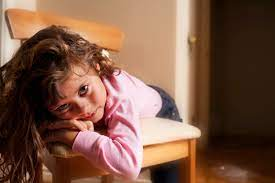
This child is about to do something awesome

I skimmed several articles and noted reddit threads where people said basically the same thing: creativity happens when kids (and adults) are bored, and the fact is we live in an age where we are almost never bored. We always have these little screens in our pockets and if ever there's a moment of downtime, we inevitably pull it out and start scrolling.

I'm not here to judge or to say smart phones phones or social media are evil. What I want to talk about is my own worry that by constantly using my smart phone I have deprived my brain of enough down time to think of stories. 

Lately I've noticed that I haven't been able to make a lot of progress on issues in my novels. Usually when I run into a section where things feel off or I'm stuck trying to figure out the next plot point, I actually come up with the answer when I'm away from my computer, just pondering things out. But that hasn't been happening for a while.

I have two sections in two different books in the series I'm currently working on that I've been stuck on for a while. The first is a section that has already been written and which I have been trying to edit, but I couldn't figure out how to fix it. There's not a lot of action, and it's rather long, and the timeline is a bit off. It's boring to edit and I'm sure it's boring to read. The second is a section that I haven't written yet and is full of action, but I don't know exactly what should happen. 

Normally with things like this I would just let it simmer for a few days and the answer would come to me randomly and I would then write it when I next got to my computer.

But that wasn't happening and I couldn't tell why.

Then, at church we were talking about distractions, and I remembered this quote that I can't find about disconnecting from electronics and letting our kids (and ourselves) be bored. I realized that I hadn’t been doing that. I have had plenty of quiet moments lately where I have nothing going on (I have a newborn that needs feeding) but instead of sitting and thinking, I immediately reach for my phone. There's no time for my brain to work out problems when it's being constantly entertained.

When I was little we sometimes called TV the one-eyed monster. I think that monster is smaller now.

So I tried to cut back a little on the electronics. At least a few times a day, if I had a moment of quiet, I let the quiet remain and I let myself be alone with my thoughts.

And already I have come up with a few ideas for how to fix the first section.

Boredom is a writing tool. We need to be bored at least a little everyday to let our brains entertain itself. Often, for me, it will do that by telling itself a story, and then I can tell that story to others.

So if you can't come up with what comes next in your stories, or how to fix a problem section, try sitting with nothing to do. Let your mind wander. With nothing else to distract it, it might come up with a solution.


Wednesday, June 7, 2023

Will ChatGPT Take My Job?

 When I was young, if someone mentioned artificial intelligence, people thought of this:


this:


or this:


People were scared of any mention of AI and robots because they immediately imagined these things taking over the world and overthrowing humanity.

Who knew artificial intelligence would actually look a lot more like this:


this:


or even this: 


That last one is a from a chat with ChatGPT, a natural language processing (NLP) AI Chatbot, and some people are just as afraid of it and other generative artificial intelligence as they once were about evil robots.

You've probably heard that AI Chatbots like ChatGPT will eventually take your job. And as a writer, they are particularly worrisome because they can write anything you tell them to, including entire novels and screenplays. The implication is that someday, we won't need human writers for written media at all, and paid human writers will be pushed out of the market for the much cheaper computerized version.

So am I worried ChatGPT will take my job?

My initial response is no. Chatbots are an excellent tool. Look how my simple question above was answered in seconds by ChatGPT, meaning I didn't have to search through Google to find every possible example of AI we use on a daily basis, or even open up an article to see if it had what I was looking for. Chatbots are also useful for writing code, as they can immediately give you the code you need in the language you want for a specific task. And, yes, they can get you started on writing, and even help you brainstorm ideas.

But innovators they are not.

Everything coming out of artificial intelligence has first been put there by humans. The way Chatbots work is by looking at what already exists, finding patterns, and then spitting out text based on those patterns. A Chatbot cannot come up with a new story, it can only tell you stories based on stories that have come before. You might argue that's what all stories are, just reusing and rehashing old tropes, putting twists on genres that already exist.

But that's the thing. Humans can surprise us with those twists. Humans make new stories by taking well-known archetypes and turning them on their heads. A Chatbot doesn't know how to do that. They can only look at what came before and repeat it. Only a human can look at what came before and change it.

So none the stories and novels and screenplays that come out of Chatbots are going to be innovative. At some point, without new input, all of these stories will be the same. Sure, some people don't mind that, but I think for the most part people will prefer to be surprised by human tales.

With that said, there is the smallest part of me that worries what will happen if that percentage of people who prefer innovation is lower than I think. If the majority of humanity don't mind consuming the same stories and tropes and archetypes again and again, especially if the cost is low, then eventually human writers probably will give up and use AI to make their books as well. And then all our media will be a boring, beige, barely entertaining pool of repetition.

So here's my call to action. If you don't want that happening, you need to send a message to the people who produce media. Let them know that you prefer to be surprised. Read and consume mostly human-generated media that is innovative and new, and they will get the hint. That's not to say all AI-generated media should be avoided at all costs, but money talks, and if the money is leaning in a certain direction, that's the direction producers will lean toward as well.

Meanwhile, as a writer, I still think ChatGPT can be a good tool to get you started. If you are stuck, or don't know what to do next, a Chatbot can write a few paragraphs for you and you can either edit that or take a few ideas from it. ChatGPT can help you do research on topics you're writing about. Try it out and see how it can help you. But remember, what it spits out is only as good as what humanity has already given it, and, well, sometimes humanity is dumb. Also, it can't reliably give you sources for what it tells you. So, take whatever it says with a grain of salt.
Thursday, May 18, 2023

My Writing Hiatus

My advice to people experiencing writer's block used to be, write a little bit every day, even if it's just a sentence. But this past year, I experienced such a motivation drain, I literally could not bring myself to write a single word.

It wasn't what you'd call writer's block. To me, at least, writer's block is when you don't know what to write. This was a complete lack of motivation. To my credit, I was pregnant, and doing anything was hard. I tried for a while to write something, but there were days when I would start up my computer, look at that Microsoft Word icon, and think, "Nope, I can't do it." Eventually I gave up and decided I needed a break.

For several months, I stopped even thinking about writing. Usually I have some plot swirling in my head, but I didn't even try to do that. And honestly, I think it was good for me. I think, for that time period, it was what I needed.

Eventually, while reading a shortened version of Snow White with my kid, I started thinking about how I wish the story was told. I came up with several chapters' worth of plot, and eventually wrote it down. After a while, even that project became dull to me, but I didn't want my momentum to stop.

So, I turned back to my quadrilogy. I wasn't ready to pick up where I left off, but someone who had read through the first book contacted me and said they would like to read the second book. I told them it wasn't ready, and I would need to fix some continuity problems first. So I tried that for a while. It was nice, because it felt like a mix between reading and writing, looking through what I'd already written and fixing things up.

But, at a certain point, even that felt like a slog. Part of the problem was I hit a section that needed a lot of fixing, and another part of the problem was the book simply was getting boring. Which meant I didn't want to read it, and I didn't want to write it.

But it was about that time that I started thinking of things that could happen in the final book, where I had left off months prior. I wrote several paragraphs, along with an outline for the next chapter. I was making progress on a project that I hadn't touched since the previous year, and then...

I gave birth.

I was too tired to write. My motivation was once again gone. I dropped writing and stopped thinking about it.

And you know? I don't feel guilty.

There is a season for everything. There is a season for being super productive, there is a season for writing, a season for editing, a season for publishing. And there is a season for being a mother and taking care of your newborn and yourself. 

I've come back to this blog to try to get some kind of writing out, to get back in the groove. Hopefully I can start writing my quadrilogy again. One thing I've learned from all this is when you're feeling a lack of motivation, maybe try another project. Maybe write a new story, maybe edit one you've already written, maybe try your hand at blogging. Or, maybe take a break. That's okay, too. When you're ready to come back, do what you can, whatever that is.

Hopefully this is the start of me coming back.

Saturday, April 24, 2021

Another one bites the dust!

 I wrote a fight scene this week. I hate fight scenes. You mught think this is a bit of a problem in the fantasy genre, which often has battles and such, and the answer is yes, it is definitely a struggle for me. I know fight scenes are necessary. Action is exciting and can keep a reader interested in between dialogue and diplomacy that also has to happen.

 When I was working on the second or third draft of my novel, Scripted, my Honors Thesis advisor told me I should cut out anything that  didn't drive the plot along. He also said I needed to trim down scenes where there wasn't any action. I had a battle scene that I realized didn't really do anything for the plot, but I had already sent him my latest draft with this chapter in it. I fully expected him to tell me to cut it. Insteas he sent it back with the comment, "Yes! Action! This is great!" Something like that.

So action is important. And who doesn't like a good fight scene? My problem is the choreography. You don't want a fight to end too quickly. If someone gets knocked out or wins too soon, it can be a let down. However, if I let things get out of hand, sometimes I can't find my way out of a fight and it ends lamely. Like someone tripping over a rock lame.

The mechanics of fights can be difficult, too, especially if weapons are involved. The chapter I wrote this week did not have weapons, but I still struggled even knowing where to start.

So here's what I did: first, I sat on it. I let some ideas come and go as I pondered some interesting things that could happen in the fight. I did zero writing that day, I just thought.

The next day, I typed up some of the best ideas from the day before, including the way I wanted the fight to end. That way I could at least try to wrap things up in a way that led to that ending.

The next day I still was not feeling excited about writing the scene but I made myself write at least one paragraph.

And stuff actually started flowing. I incorporated a few of the ideas I had writtwn previously, and got about half-way through the chapter. The next day, I finished it, with the ending I had planned. A few things got changed to make it flow better, and then it was done.

I can't tell you how good it feels to be done with that chapter! I don't want to say I dread action scenes, they're just not the easiest thing for me to write. Having a plan can help, though.

What are some of your most difficult scenes to write? What helps you get them done?

Tuesday, March 23, 2021

Author Burnout

For the past couple of months I've been super excited over the publication of Scripted, and pumped up to finish the quadrilogy I've been working on since I was a teenager. Since about the beginning of this year, I've been trying to edit the second book in that series to fix some continuity errors that happened because I changed a lot about some characters over the years, along with my writing style. I finally got about halfway through that second book and then...

I got burned out. I am tired of working on this book. I know exactly what needs to happen, I know the changes that need to be made, but I don't want to go through the process of making those changes. I just want it to magically be done.

Maybe part of my burnout is from working on the same story for so long. But I think part of it is also because Scripted has hit a dead-end as well. I didn't exactly do anything that you're supposed to do when you self-publish. I didn't get reviews before publication, I didn't do much promotion, I haven't paid for any marketing. There is a reason for this: I know that until I have my quadrilogy ready, I'm probably not going to get a lot of attention. Series are one of the best ways to hook new readers. And without any other books under my belt, Scripted alone probably won't get me noticed as an author.

So I've been waiting on promoting myself as an author until my quadrilogy is close to being done. The problem is that puts a lot of pressure on me to get it done. Scripted is sitting there like an orphaned book, and I want to get more readers and sales, but I also don't want to bother until I have more novels available for purchase... but then that brings back the pressure thing. It leaves me feeling a little hopeless.

Normally, I advise authors to write at least a little bit every day, even if it's just a few sentences. So I'm writing this blog, because I don't know if I have it in me to write my quadrilogy today. I don't want to take too big a step back from this project, because the point is to fix continuity problems; if I wait too long, I might forget what I've done, and just create more problems.

Maybe now is the time to have a beta reader help me out. If someone else can find discrepancies in my writing for me while I take a break, maybe I can come back at it refreshed and ready to work.

Anyone want to help me out?

Thursday, March 4, 2021

Forbidden Words

There are a couple of words that we use everyday that, as a writer, you should avoid. It's not always possible to cut them from a sentence, and there may be times when they're appropriate. No, I'm not talking about curse words. I'm talking about words that make you sound like an amateur author. They take up space without giving meaning. They slow down your readers. Here's my list of forbidden words that you need to watch out for in your writing.

1. "Was/Is"

Of course you can't always avoid using was or is in a sentence. They're conjugations of the verb "to be," after all, and there are many times when you need them. But "was/is" are often used in phrases that are detrimental to your writing, so if you see "was/is" you need to be on the lookout for these situations:

        A. Passive voice.

Passive voice is where the subject of a sentence is the receiver of the action. For example, "The rock was picked up by Scarlet." It's much better to say, "Scarlet picked up the rock." As you can see, "was/is" almost always accompanies the passive voice. If you know who is doing the action, cut out "was/is" and make the person doing the action the subject. It makes for a much stronger sentence.

An English professor told me there is one occasion where passive voice is okay, and that is when the person receiving the action is being victimized. So, the active voice would be, "Someone killed my friend," and the passive would be, "My friend was killed." The passive here emphasizes that the friend was the victim and puts focus on them rather than the killer. 

        B. Present participles (-ing verbs)

I don't mind this one so much in the present tense (how often do you say, "I go to the store," rather than, "I'm going to the store"), but I try to avoid it in the past tense when writing professionally. Instead of "I was changing diapers constantly," write, "I changed diapers constantly." Instead of "He was coming toward me," write, "He came toward me." It makes the verb stronger and so makes your writing stronger, too.

The exception for this is if the action is interrupted. So, "She was running when the rock hit her," is okay. Especially since, "She ran when the rock hit her," means something different. Also if a character doesn't notice something until the action has already been going on for a while, using the past participle might also be okay. For example, "The girl looked up. The ball was flying at her." But I still try to avoid this unless it really feels right.

Like I said, was/is are sometimes necessary, but if you see them often in your writing, ask yourself what they're doing in a sentence and whether there is a better way of expressing what you want to say.

2. "Started"

I used to use "started" all the time until a creative writing professor said I should completely cut it out. She said I don't need to describe the start of an action, I can just say what action happened and be done with it. So instead of, "I started running," say, "I ran." If you really want to emphasize that it happened without preamble, use a strong verb like, "I broke into a run." 

3. "Suddenly"

Similar to "started," you don't need to describe the abruptness of an action with "suddenly." If you do, then the verb you're using to describe the action isn't strong enough. There are other ways to convey that an action is interrupting another action, too. You can cut someone off mid-sentence ("He said, 'I am tired of telling--' The woman slapped him" doesn't require that you say she suddenly slapped him), or use onomatopoeia ("The girl sat quietly. Bam! Something hit her from behind"). Suddenly, started, and all their synonyms are throw-away words that make your writing weaker.

4. Adverbs

This one is the hardest for me. Who doesn't like a good adverb? But adverbs are a bit of a crutch for weak verbs. "He said angrily" can be replaced with, "He snapped." "She slowly backed away" can be turned into, "She inched out of the room." Do you see how those new verbs have so much more flavor and description to them? I don't know if you have to cut every adverb from your writing (though I had a professor who thought you should), but if you are describing every action with something-ly, it can get annoying and you ought to consider some better verbs.

Art by Juhele

In creative writing, we want our words to pop. We often think of adjectives and adverbs as being descriptive words, but in reality, verbs and nouns can be just as descriptive. If you avoid the forbidden words above and replace them with bold verbs and nouns, your writing with be much stronger and more enjoyable to read.


Monday, February 22, 2021

Maturing My Books

I've had a burst of motivation for writing since publishing Scripted. Honestly, publishing a novel has probably made me more excited about working on my books than almost anything else has.

Way back in high school, I started writing a sci-fi/fantasy trilogy. It took me about four years just to finish the first volume, and I'm not even sure how long the second took since I took a break from it for several years in college. I'm still working on the third. My writing style, some of the plot, and the background of some characters have all changed since I started writing that first book. I decided last year that I wanted to go back to the first book and update everything so the first, second and third books were more cohesive, and so I could feel semi-okay with having someone read it to give me feedback.

Besides having to completely rework a few chapters to fit with the plot changes I made later on in the trilogy, the biggest problem I've come across is dialogue. My main character is a teenager, and I wrote the first book while I was a teenager, so you would think that she would talk like a teenager. She doesn't. She talks like some wizened old war veteran. Which, given her age, actually makes her sound very conceited, not to mention unrelatable.

So, ironically, in trying to make my high school writing more mature, I am making my main character sound less mature. But I find myself liking her much better. She actually has a personality. I think originally, I wanted her to be this strong heroine that girls could look up to. Now, I still think you can look up to her, but you can also relate with her.


"Growing Up" by Lomasi_ is licensed under CC BY-ND 2.0
Aw, my book is growing up.
"Growing Up" by Lomasi_ is licensed under CC BY-ND 2.0